
Machine weft v/s Hand tied weft | Which is better?
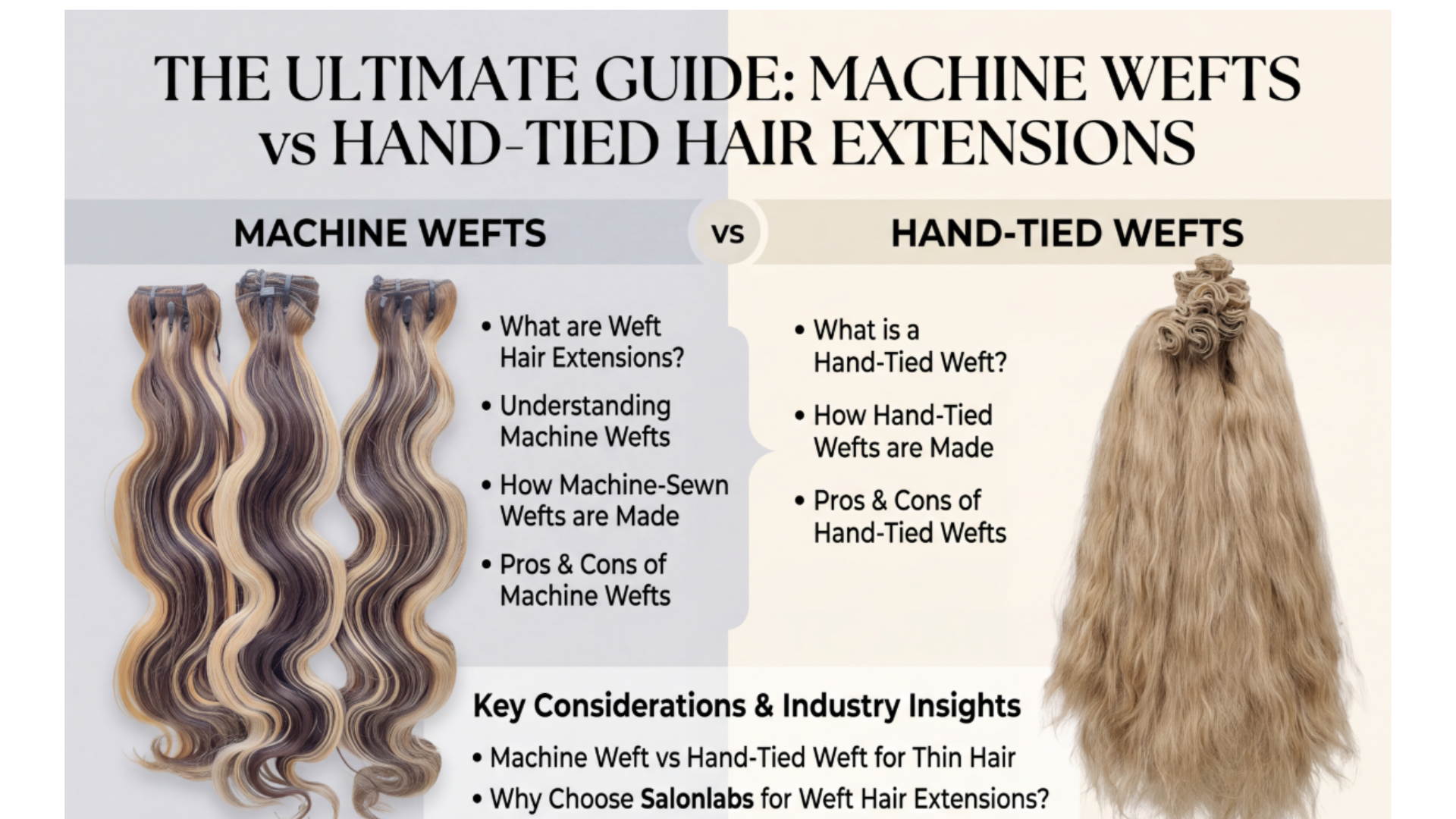
From effortless application to your desired volume, discover the necessary information to know about weft hair extensions to achieve your ideal look.
If you’re considering enhancing your hair length or fullness, you’ve likely conducted some research of your own. These unique hair extensions consist of strands of hair that are either sewn or bonded into your natural hair, resulting in a denser, more voluminous appearance. They offer versatility, are simple to care for, and suit nearly every hair type. In this guide, we will delve into all aspects of weft hair extensions, including the various types, installation methods, and maintenance tips.
What are weft hair extensions?
You probably might have heard or seen about weft hair extensions, but what are they actually?
In simple language, Weft hair extensions contain strips of hair that are sewn or bonded to your natural hair to enhance volume, length or sometimes both. These extensions come in two types, hand-tied or machine made depending on your preferences and budget. Their popularity emerges from the natural appearance they provide, blending seamlessly with your own natural hair, making them the favourite go-to option for those seeking to elevate their hairstyle.
What is a hand-tied weft?
![]()

![]()
The process of intricately tying the hair with extension seam and secured with knots to form is hand-tied wefts. These extensions are meticulously crafted in hand and are light weight, resulting in a product that blends seamlessly with natural hair. Their key features include:
- The design is lightweight and flexible, offering a superb option for a more natural look.
- Exquisite craftsmanship enables personalized choices regarding color, length, and density.
-
They can perfectly align with individual preferences.
How hand-tied wefts are made?
Hand-tied wefts are made by skilled artisans who meticulously tie small bundles of hair which usually consists of 15-20 strands per knot with exact 2-3 millimeters intervals into a delicate, flexible base thread. Producing a single row of hand-tied weft takes anywhere between 45-90 minutes, while machine weft can be completed in just 5-10 minutes. This difference accounts for the higher price point and the outstanding quality of the final product.
This manufacturing guide of hand-tied wefts comes from Salonlabs, a superior manufacturer located in India, specialized in both hand-tied and machine weft extensions for wholesale clients globally. Let’s look through the process of making hand-tied wefts with each step below.
Step 1 — Hair Preparation: Remy hair, with aligned cuticles, is categorized by length, weighed into small bundles, and arranged in the proper root-to-tip orientation. Any broken or shorter strands are discarded. For double-drawn hand-tied wefts, the removal of shorter hairs will have already occurred in a previous processing stage.
Step 2 — Thread Setup: A slender, high-strength polyester or cotton thread is pulled tight across a horizontal frame or jig. It is crucial that the thread maintains an even tension throughout the knotting process — if it is too loose, the weft will lack uniformity; if too tight, it will lose the flexibility that characterizes hand-tied wefts.
Step 3 — Hand Knotting: The artisan takes a small bundle of 15-20 strands, folds them over the base thread, and performs a precise hand knot that secures the hair while preserving a remarkably thin profile. Knots are positioned at intervals of 2-3 millimeters along the thread. Every knot should be sufficiently secure to avoid shedding, yet not so tight as to form a noticeable bump.
Step 4 — Row Formation: The artisan progresses along the entire thread length, constructing the weft row to the desired width (usually between 8-16 inches per row, based on the buyer's requirements). Several rows are crafted to complete a full set.
Step 5 — Sealing: Once the knotting is finished, the ends of the base thread are sealed to prevent any unraveling. Some manufacturers choose to add a thin layer of flexible sealant along the weft for extra protection, although the finest hand-tied wefts primarily depend on the quality of the knots.
Step 6 — Quality Assessment: Each weft undergoes a thorough inspection for knot uniformity, even hair distribution, resistance to shedding, and overall thickness profile. Wefts that fail to meet the required standards are either reworked or discarded.
Pros of Hand-Tied Wefts:
Hand-tied wefts are praised for their capacity to deliver an authentic look and feel that often surpasses that of machine wefts. These hand-sewn wefts are sleeker and less conspicuous, contributing to a more natural appearance overall. Their seamless integration and subtlety make them a favored option for clients seeking fewer wefts for a genuine aesthetic.
Moreover, hand-tied extensions are regarded as safer for the health of the wearer's natural hair. This technique reduces the likelihood of hair shedding from the weave, adding an extra layer of safety and comfort. With their reduced density and lighter weight, they offer greater comfort for daily wear, making them a popular choice among many
Cons of Hand-Tied Wefts:
Even though hand-tied wefts offer various advantages, they also present few drawbacks that warrant consideration. Their primary disadvantage is their high cost when compared to machine weft. The time consuming process of crafting these extensions leads to higher prices, which may deter some potential customers.
Additionally, the installation of the hand-tied weft demands more time. The meticulous and hands-on nature of the application means that the initial setup can extend over a few hours, necessitating a greater commitment from both the stylist and the client.
Understanding Machine wefts:
Machine weft hair extensions are made using industrial sewing machines that together stitch hair strands for large-scale production. This technique typically yields a denser hair weft compared to hand tied variations.
The manufacturing method for machine wefts contributes to their strength and uniformity, which can be a notable benefit. However, their density and thickness may give a bulkier feel when worn. Recognizing these attributes is crucial for making an informed choice regarding the suitability of machine weft extensions for you.
How Machine Sewn wefts are made?

The production of wholesale machine weft hair extensions demands precise mechanical accuracy, adept manual skills, and meticulous preparation of raw materials. The process starts with the collection of raw, single-donor human ponytails to maintain complete cuticle alignment. The hair then undergoes treatment using heavy metal hackling boards to eliminate shorter filler strands and ensure a consistent root-to-tip orientation.
Subsequently, technicians introduce the aligned strands into three-head industrial sewing machines, where the top of the hair is folded, and a tightly locked nylon thread is stitched across the seam. To guarantee maximum security of the tracks, a lightweight, heat-set Glue sealant is applied over the thread rows. Ultimately, the continuous wefts are washed, checked for shedding, calibrated to precise 100-gram bundles, and prepared for export.
Pro’s of Machine-tied wefts:
One of the best advantages of machine-tied wefts is their cost-effectiveness. Produced through machinery, they incur low labor cost, rendering them a more economical choice when compared to the hand-tied wefts.
Another significant advantage is their longevity. Machine wefts tend to be more robust than hand-tied options, offering a durable solution. This reliability can assure those seeking an affordable option that remains steadfast over time.
Con’s of Machine wefts:
Nonetheless, machine wefts do come with certain disadvantages. Their additional weight and size can create a bulkier sensation when worn, which might not be comfortable for everyone. This added bulk can also result in a less natural look, as the wefts may struggle to blend harmoniously with one's natural hair.
Moreover, if not installed correctly, they can exert pressure on the roots of natural hair. Poor installation of machine wefts can cause damage, highlighting the importance of having them applied by a qualified professional to prevent any negative impact on your natural hair.
Machine weft vs Hand-tied weft for thin hair.

For people with fine or thin hair, hand-tied wefts represents an excellent choice. Being lighter than machine-sewn wefts, hand-tied wefts apply less weight and pressure on fragile strands.
They provide comfortable and gentle wearing experience on attachments because of their lesser tension.
When choosing your setup, prioritize proportional length and density. Shorter, well-layered tracks tend to appear more natural and can create a convincing sense of fullness. Aim for a harmonious balance that enhances volume without overpowering finer hair. If necessary, incorporate a few lighter-density pieces near the face, paired with slightly fuller tracks at the back for a seamless, soft finish.
Why choose Salonlabs for weft hair extensions?
After reading this blog, now you have a better understanding of what wefts are and their types, now it's time to get in touch with the best Weft hair extensions suppliers. Salonlabs is definitely one of a kind in this hair extensions market with over 15+ years of experience in hair extensions manufacturers. Our superior hair extensions are made from 100% Virgin Indian Human hair which are sourced directly from South Indian Temples. As premium hair extensions manufacturers with customers spread across the world, we deliver and present our brand with trust and truth.
Looking for weft hair extensions manufacturers?
Choosing between Hand-tied and Machine weft is only a single part of selecting the right hair extensions product.
The quality of the hair, the manufacturing process, construction and consistency of supplies matters and plays an important role in purchasing of the final product.
If you are a Salon owner, distributor or wholesale extension buyer looking for Indian human hair extensions, Salonlabs can help you with the right guide to choose the best product for your business from specifications to the product explanation, we offer genuine service to clear your every doubt.
For retail and wholesale weft hair extensions, connect with Salonlabs for the top-quality weft hair extensions in bulk and wholesale prices.
Frequently asked questions (FAQ’s)
What are hand-tied wefts?
A "hand tied weft" denotes hair extensions created by carefully binding hair to the seam and knotting it, producing a slim but robust weft that is less hefty than machine-tied alternatives. This technique improves the natural look and offers greater flexibility in styling options.
Are hand-tied wefts better than machine tied wefts?
There is no winner between two wefts. However, hand-tied wefts are generally thinner and flexible while machine wefts are generally robust, economical and consistent. The best of these two completely depends on the customer's requirement and hair.
Among Hand-tied and Machine wefts, which is lighter?
Hand tied-wefts are generally lighter when compared to machine wefts. However actual weight differs according to their length, weight and hair density
Are hand-tied wefts more expensive than machine wefts?
Hand-tied wefts typically carry a higher price tag than machine wefts, owing to the detailed craftsmanship involved in their creation. Conversely, machine wefts are more affordable as they are produced in bulk.